
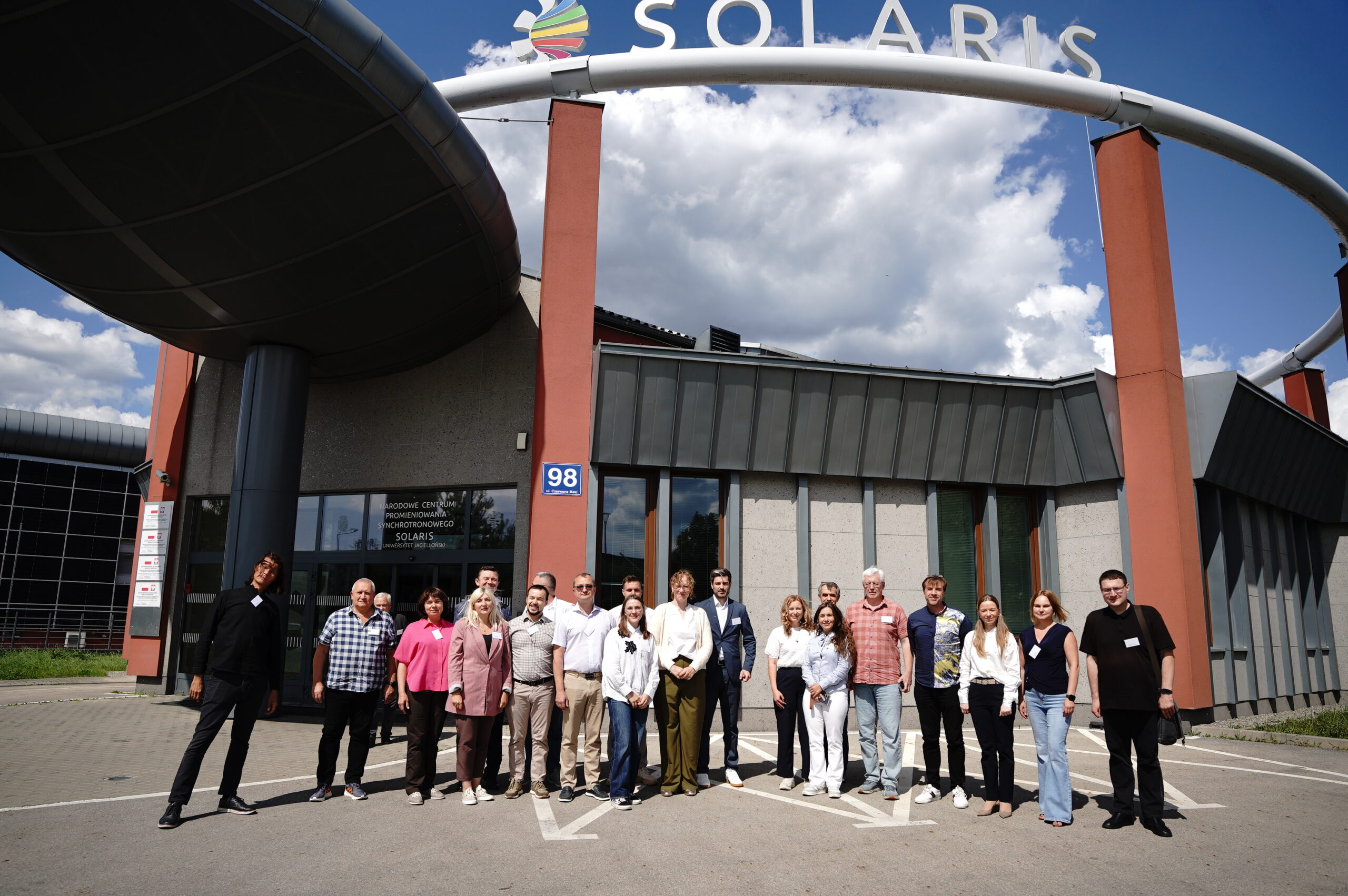
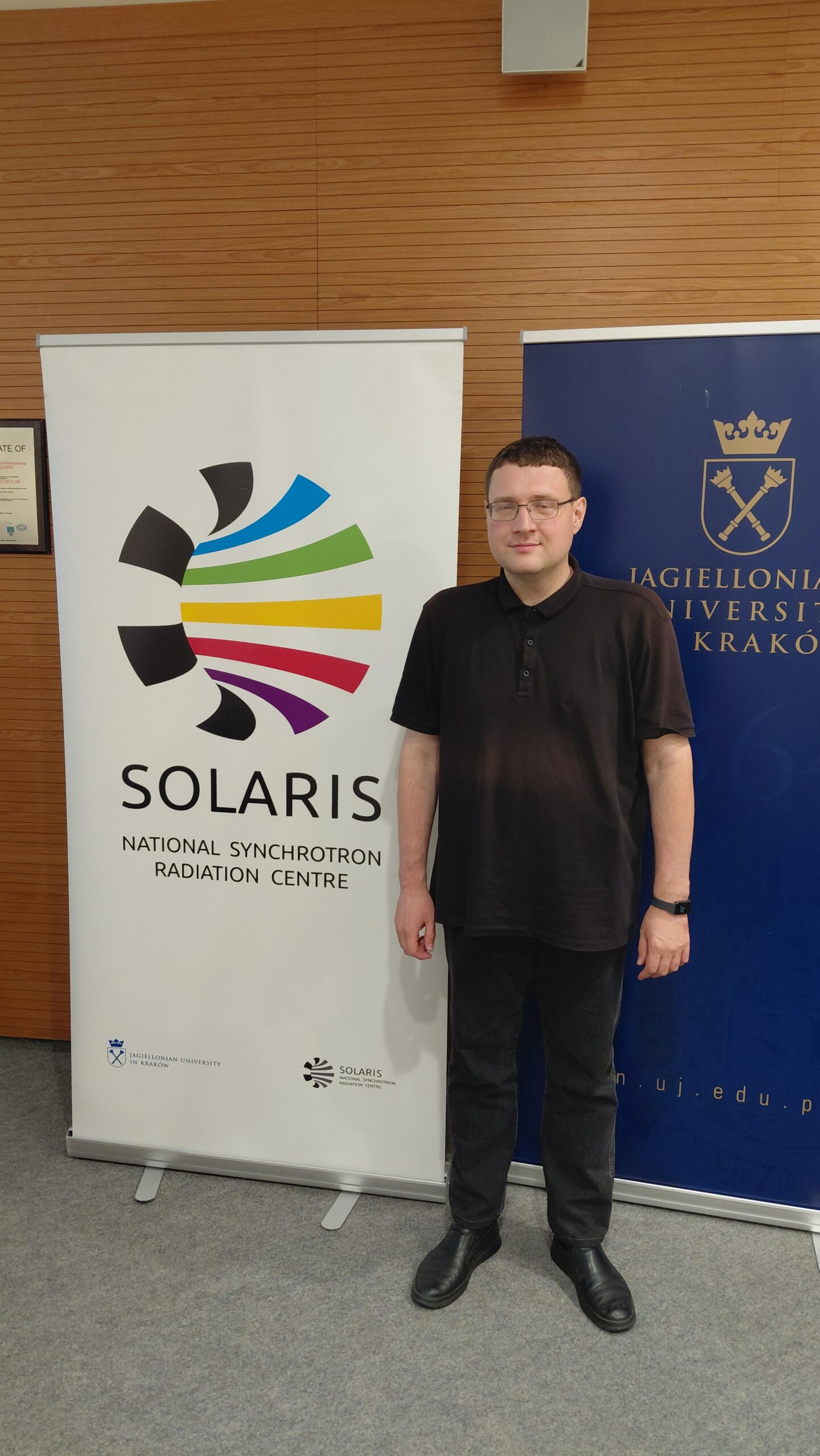
On July 22–23, 2026, Dr. Oleh Lysak, Head of the Young Scientists Council and Senior Researcher at the Department of Geothermal Energy of the Institute of Renewable Energy of the National Academy of Sciences of Ukraine (IRE NASU), made a working visit to the National Synchrotron Radiation Centre SOLARIS in Krakow (Republic of Poland). Representing IRE NASU, he participated in the strategic Foresight Workshop: The Futures of the R&I System in Ukraine 2035+. This foresight workshop, attended by experts from the research and innovation sphere, was organized within the framework of the EU Horizon Europe program project LUKE.
About the LUKE Project
The LUKE project (“Linking Ukraine to the European Research Area Joint Funding and Capacity Building Platform for Enhanced Research and Innovation Cooperation”, grant agreement 101188315) is funded by the European Union. Its main goal is to strengthen cooperation, build capacity, and seamlessly integrate Ukrainian science into the European Research Area (ERA). More detailed information about the project is available at the link: https://doi.org/10.3030/101188315.
Participation of IRE NASU in Shaping the Strategic Research & Innovation Agenda for Ukraine 2035+
The main purpose of the IRE NASU representative’s participation in the event was to ensure the institution’s topics were considered while developing materials for the Draft Strategic Research & Innovation Agenda for Ukraine 2035+ within the LUKE project. This document aims to help determine priority themes for future funding under upcoming EU programs aimed at supporting research in Ukraine. Therefore, it was crucial to draw additional attention to topics and aspects related to renewable energy.
Over two days of intensive work, experts analyzed critical trends in the development of Ukrainian science using the STEEPV methodology (Social, Technological, Economic, Environmental, Political, and Values aspects), applying the Futures Wheel foresight method. Additionally, utilizing the Three Horizons strategic planning method, participants developed priority strategic solutions in the format of a structured What/Why/When/Who roadmap canvas, identifying key actions for the target model of Ukraine’s innovation ecosystem by 2035.
Guided Tour of the SOLARIS Research Facility
Furthermore, during the visit, participants took a guided tour of the SOLARIS research facility, which operates within Jagiellonian University and specializes in multidisciplinary, high-precision research in materials science, physics, chemistry, and structural biology using synchrotron radiation and cryo-electron microscopy. Access to this infrastructure is provided on a competitive basis through the Transnational Access mechanisms of EU programs, such as Horizon Europe, opening new opportunities for Ukrainian scientists.
Results of the Visit for IRE NASU
The immediate result of IRE NASU’s participation in this foresight workshop is the aforementioned involvement in developing materials for the Draft Strategic Research & Innovation Agenda for Ukraine 2035+ under the LUKE project, which ensured the consideration of the institution’s core topics.
In a strategic perspective, the acquired knowledge, understanding of key European trends, and mastered foresight methods will serve as a scientific and methodological foundation for preparing new grant proposals. Considering the current trends in the development of the EU research space will allow the Institute to timely adapt its project applications to the future requirements of European grant agencies, which will significantly enhance the institution’s grant capacity and facilitate the attraction of funding in the coming years.
More information about the event:
- Details on the website of the National Research Foundation of Ukraine (NRFU), a partner of the LUKE project: https://nrfu.org.ua/en/news-en/strategic-foresight-workshop-on-the-future-of-ukraines-research-and-innovation-system-beyond-2035-held-in-krakow/
- News on the website of the host institution — SOLARIS National Synchrotron Radiation Centre (Krakow, Poland): https://synchrotron.uj.edu.pl/en_GB/aktualnosci/-/journal_content/56_INSTANCE_ZEhuXSihDJbq/1457771/161323007